Thursday, February 4, 2016

February 05, 2016


Anastasia State Park
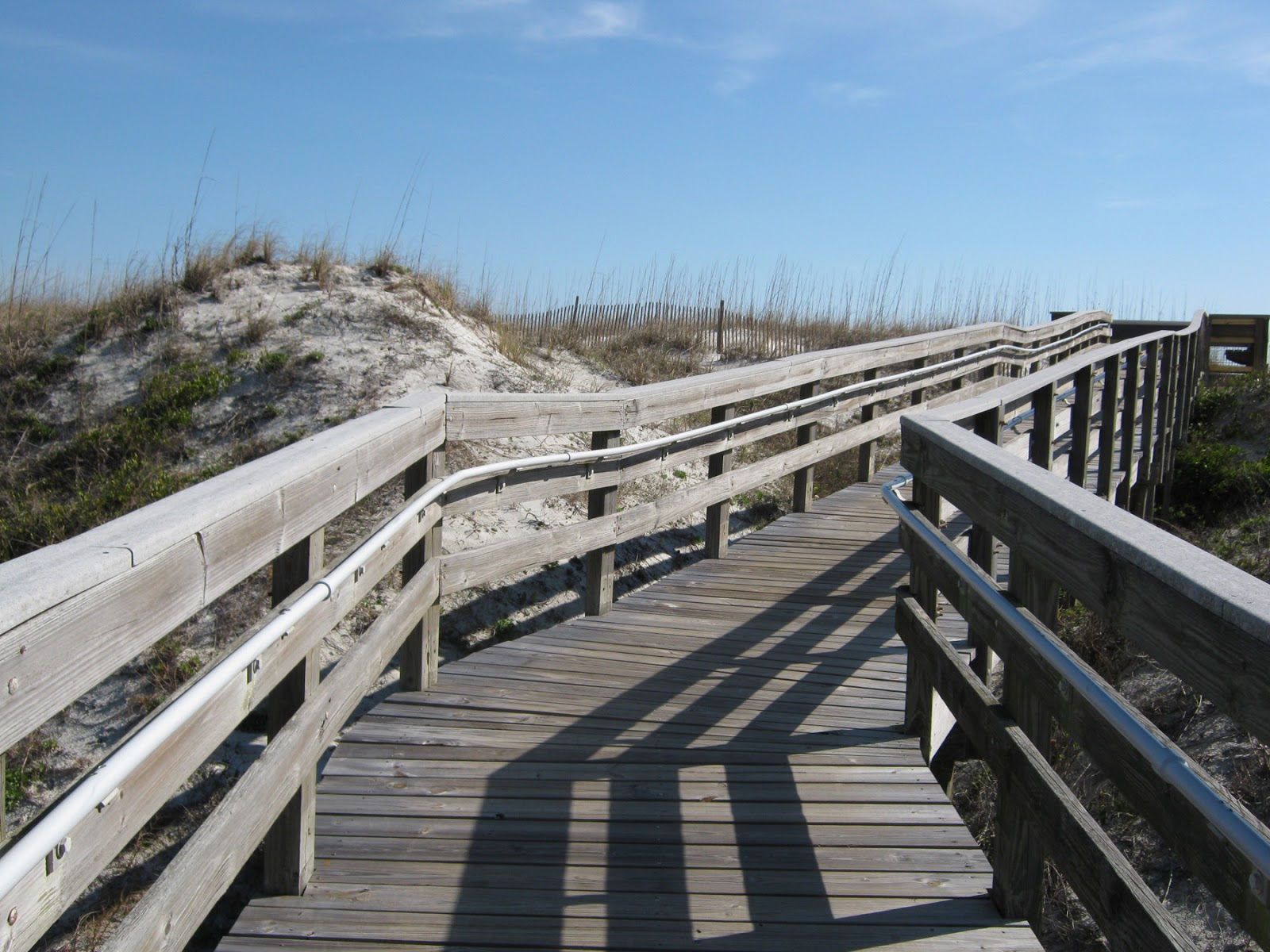
  
There are many places in and near St. Augustine where you can enjoy the ocean, and Anastasia State Park offers its own unique take. (The entrance fee seems rather high if you’re intending on just driving around a little, seeing the ocean, and going back, but that’s just my personal opinion). This photo is one of my favorite Florida shots. I think the wooden railing has been placed here just as much to keep folks off the dunes as to provide an aesthetic setting; though you can’t see the ocean on this picture, the variety of focal points --- the dune, the boardwalk itself, the beach fence, the tall grasses --- makes up for it, I think.

Trinity Episcopal Church


It’s nearly impossible to get a good photo of Trinity Episcopal Church while on the move, but somehow fate smiled on me and I managed to snap one. This church was originally constructed in the early 1830s and was enlarged throughout the late 19TH and early 20TH centuries. Interestingly, the Episcopalians were the first Protestants in Florida, with many believers attending makeshift meetings during the British occupation between 1763 and 1784. After Florida became an American territory in 1821, other denominations set up roots as well.


(c) 2015-2016 St. Augustine Fridays

Thursday, January 28, 2016

January 29, 2016


Castillo de San Marcos

  
Photographers love this kind of weather! Here we see Baluarte de San Pedro --- St. Peter’s Bastion --- and one of the Castillo’s resident Spanish mortars. Save for the modern floor, the informational marker, and the “do not enter” sign, this could be a photo from the past (if, of course, they’d had cameras in the colonial era). And please, folks, don’t ignore the “keep out” signs. They’re there for a reason! The lighter-colored coquina blocks you see along the wall replaced blocks that were crumbling due to age and handling. The Castillo is over 330 years old and needs to be treated with care.

Fountain of Youth


Picturesque without even trying: Not only is the Fountain of Youth entrance a classy design, with plenty of colors, native coquina pillars, and the lovely (and intriguing) “resurrection ferns” on either side, but there’s even a little strand of iconic Spanish moss hanging from the coat of arms in the center of the arch. I highly encourage folks who think this is a “kitschy” tourist attraction to wander the grounds and take in the natural beauty and history. This has long been one of my favorite places to visit in St. Augustine, and I certainly don’t go for the water!


(c) 2015-2016 St. Augustine Fridays

Thursday, January 21, 2016

January 22, 2016


Mission Nombre de Dios


You can tell just by looking at this photo that the Mission is a peaceful place. I especially like the shaft of sunlight highlighting the trees, and the tombstones that, instead of being eerie, are somehow serene. I highly recommend that visitors take the time to read the gravestones and maybe do some further research on the lives and stories of the people buried here.

St. George Street


I’m not certain, but it looks as if the old mill-wheel at Mill Top Tavern is made of coquina, that special seashell composite of which so many structures in St. Augustine are built. According to the sign, the wheel dates from 1947 but was rebuilt in 1996. It’s nice to sit here and watch the water rippling. That water, interestingly, is a bright algae green (or at least was when I last visited) which makes the scene strangely aesthetic.


(c) 2015-2016 St. Augustine Fridays

Thursday, January 14, 2016

January 15, 2016


Castillo de San Marcos

  
Did you know that the Castillo’s four bastions are named for saints? This is Baluarte de San Pedro (Bastion of St. Peter). The bottom half of the wall dates from the 1670-90s, but the walls were raised in the mid-1700s. History tells us the walls were originally white and the towers were painted red, and you can still see a lot of the red paint on this particular tower. You can also see some of the coquina retaining walls at left. There’s nothing in this shot that wouldn’t have existed hundreds of years ago, except that the Castillo has of course aged considerably in its appearance.

Fountain of Youth


One of my favorite parts of the Fountain of Youth complex is the Timucua Indian village. Although many Americans are familiar with French, Spanish, and English history, this is a culture you don’t learn about in the history books. Interesting fact: The word “Timucua” was given to this tribe of Native Americans by European explorers. No one has the foggiest idea how they referred to themselves. Here we see the inside of a Timucua dwelling, complete with all kinds of items which add visual interest. I don’t know about you, but I’d much rather walk in on a fully-arrayed Timucua warrior than a helmeted Spanish conquistador . . . especially with some of my ancestors being Huguenots and all . . .


(c) 2015-2016 St. Augustine Fridays

Thursday, January 7, 2016

January 08, 2016


 St. Photios Greek Orthodox Shrine
 

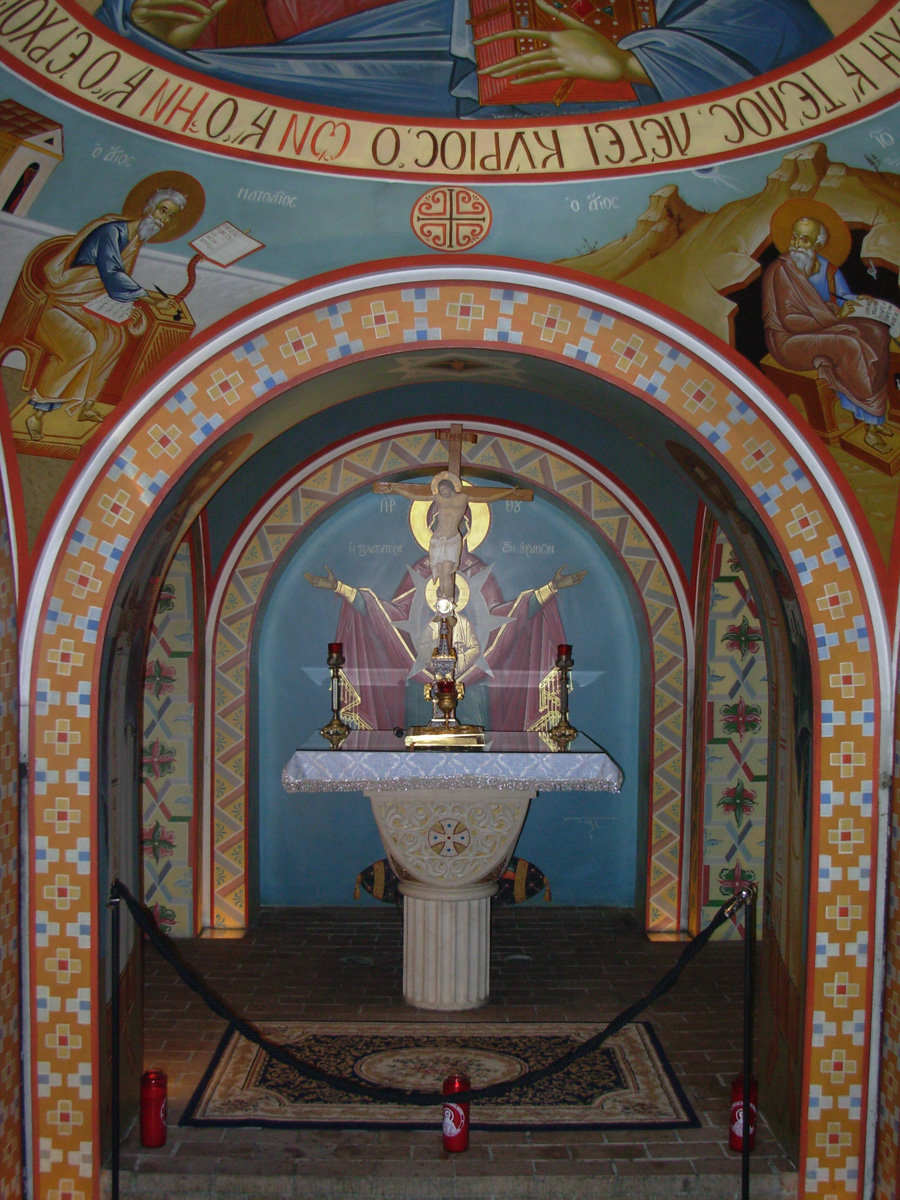
St. Photios is one of those places where you can find peace even if you espouse a different faith, or none at all. There’s just something intrinsically comforting about the beautifully-painted walls, the shrine and its flickering candles, the slow-paced, spiritual atmosphere. If you go, make sure to check out the details on the murals as well as the various historical exhibits. The shrine gift shop offers many unique gifts based on the Greek Orthodox tradition. As an added bonus, if you like exploring old houses, this structure known as the Avero House was built around 1748.  

St. Augustine Lighthouse


This is just one of the Lighthouse complex’s many exhibits, and shows a model of the original lighthouse which guided ships at sea until the 1870s. This first lighthouse began as a Spanish structure and was gradually enlarged. When the new lighthouse was constructed, the original one became defunct, and was destroyed by the wash of the tide less than a decade later. 


(c) 2016 St. Augustine Fridays