Thursday, January 21, 2016

January 22, 2016


Mission Nombre de Dios


You can tell just by looking at this photo that the Mission is a peaceful place. I especially like the shaft of sunlight highlighting the trees, and the tombstones that, instead of being eerie, are somehow serene. I highly recommend that visitors take the time to read the gravestones and maybe do some further research on the lives and stories of the people buried here.

St. George Street


I’m not certain, but it looks as if the old mill-wheel at Mill Top Tavern is made of coquina, that special seashell composite of which so many structures in St. Augustine are built. According to the sign, the wheel dates from 1947 but was rebuilt in 1996. It’s nice to sit here and watch the water rippling. That water, interestingly, is a bright algae green (or at least was when I last visited) which makes the scene strangely aesthetic.


(c) 2015-2016 St. Augustine Fridays

Thursday, January 14, 2016

January 15, 2016


Castillo de San Marcos

  
Did you know that the Castillo’s four bastions are named for saints? This is Baluarte de San Pedro (Bastion of St. Peter). The bottom half of the wall dates from the 1670-90s, but the walls were raised in the mid-1700s. History tells us the walls were originally white and the towers were painted red, and you can still see a lot of the red paint on this particular tower. You can also see some of the coquina retaining walls at left. There’s nothing in this shot that wouldn’t have existed hundreds of years ago, except that the Castillo has of course aged considerably in its appearance.

Fountain of Youth


One of my favorite parts of the Fountain of Youth complex is the Timucua Indian village. Although many Americans are familiar with French, Spanish, and English history, this is a culture you don’t learn about in the history books. Interesting fact: The word “Timucua” was given to this tribe of Native Americans by European explorers. No one has the foggiest idea how they referred to themselves. Here we see the inside of a Timucua dwelling, complete with all kinds of items which add visual interest. I don’t know about you, but I’d much rather walk in on a fully-arrayed Timucua warrior than a helmeted Spanish conquistador . . . especially with some of my ancestors being Huguenots and all . . .


(c) 2015-2016 St. Augustine Fridays

Thursday, January 7, 2016

January 08, 2016


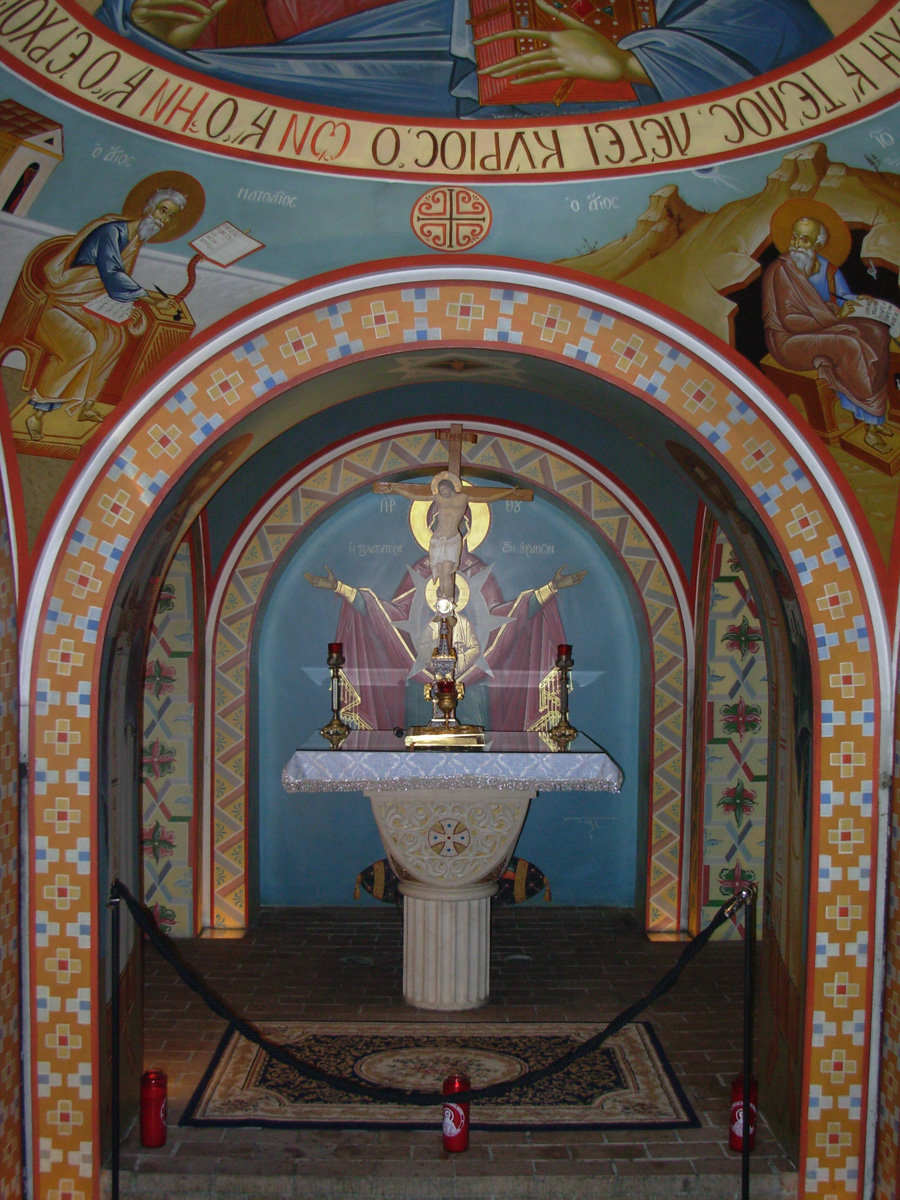
 St. Photios Greek Orthodox Shrine
 

St. Photios is one of those places where you can find peace even if you espouse a different faith, or none at all. There’s just something intrinsically comforting about the beautifully-painted walls, the shrine and its flickering candles, the slow-paced, spiritual atmosphere. If you go, make sure to check out the details on the murals as well as the various historical exhibits. The shrine gift shop offers many unique gifts based on the Greek Orthodox tradition. As an added bonus, if you like exploring old houses, this structure known as the Avero House was built around 1748.  

St. Augustine Lighthouse


This is just one of the Lighthouse complex’s many exhibits, and shows a model of the original lighthouse which guided ships at sea until the 1870s. This first lighthouse began as a Spanish structure and was gradually enlarged. When the new lighthouse was constructed, the original one became defunct, and was destroyed by the wash of the tide less than a decade later. 


(c) 2016 St. Augustine Fridays

Thursday, December 31, 2015

January 01, 2016


**I wish everyone a happy and healthy 2016!**

Castillo de San Marcos

  
You can find some pretty great views from the Castillo gun deck. Here we see part of the moat and its retaining wall, as well as the “Glacis” and “Covered Way” (levels of defenses). The palm-log wall is the reconstructed Cubo Line. The original was built in the 1700s and helped protect the town. You can see part of the City Gate peeking through the trees at top left, and also visible are the Huguenot Cemetery  (top center) and the visitor center (top right). As you can see, there are no guard rails across the cannon embrasures, so make sure you don’t take a tumble.

Fountain of Youth


Here we see part of a canoe such as the ones used by Timucuan Indians before and during the Spanish arrival in 1565. All of the informative displays at the Fountain of Youth, and the grounds in general, are beautifully manicured and create aesthetic interest. The combination of sand-colored stones and wooden planks really sets the canoe apart from its surroundings. The marker explains the history and usage of Timucuan transportation.


(c) 2015-2016 Skies of Blue and Gray

Friday, December 18, 2015

December 18, 2015

**I'll be taking off next Friday for Christmas. See you in the New Year!**
 

Special Feature: Fort Mosé


If you have French, Spanish, Greek, African-American, Caribbean, Native American, or British heritage, chances are you’ll find something pertaining to your cultural heritage in St. Augustine. One great cultural site often overlooked is Fort Mosé, short for Gracía Reál de Santa Teresa de Mosé, which was created as a free black colony in the late 1730s. To live in this settlement there were only two requirements: you had to pledge loyalty to the Spanish crown, and you had to be Catholic. The first photo shows the general location of the now-lost fort. I’ve heard that funds are being raised to build part of a fortification so visitors will have a better understanding of what was here.


The second photo shows the heritage museum located at Fort Mosé. It’s not a very big place but is packed with information. There are various displays showcasing all aspects of African life in the 18th century, some touchable exhibits, and lots of interactive displays as well. If you stand on specially-appointed circles (seen in the photo) you’ll hear stories about the fort’s history and culture. If you’re lucky you might get to see homemade African tribal masks constructed by local children. Fort Mosé isn’t very far from town and is a great choice for anyone who wishes to learn something more than the “typical” history of St. Augustine.


(c) 2015 St. Augustine Fridays